Slavery in Florida in the 1600s

Slavery in the New World began before the British settled places like Jamestown. Before the British, the Spanish occupied La Florida, a territory that included all of present-day Florida, Georgia, and Alabama. Slavery in Florida actually came with the Spanish conquistadores. And with these first black people in North America came lots of firsts that have not made it into our general history lessons. Accomplishments to celebrate.
To understand slavery in Florida in the 1600s, we have to go back a bit further to when the Spanish first came to La Florida. Though we generally consider St. Augustine to be the oldest city in the United States, it wasn’t the first settlement here. Pensacola, Amelia Island, and San Miguel de Gualdape were actually settled first – Pensacola in 1562, Amelia Island (or near it) in 1564 by the French, and San Miguel de Gualdape way back in 1526. None of these, however, remained occupied and so St. Augustine, founded in 1565, survived and became known as the oldest continuously-occupied European city in the United States.
Florida Slavery in San Miguel de Gualdape
The first slaves in what would become the continental United States arrived in 1526 at a settlement called San Miguel de Gualdape. No one really knows where that settlement was except that it was likely somewhere in northern Florida or Georgia. Its significance, however, lies in its short life and subsequent destruction. Within two months of arriving, the slaves rebeled and destroyed the settlement. They fled.
First Settlement in USA is African, not European
Though no one knows for sure whether or not they survived, it’s likely the formerly-enslaved men and women who rebelled either settled with local Native Americans or formed their own settlement. If they created their own settlement, the first settlement in the United States would actually be an African one and not a European one.
First Slave Rebellion
The other significant point about San Miguel is that it’s the first recorded slave rebellion in the United States. Occurring in 1526, it happened a full 137 years before our history books claim the first slave revolt. Most of those books say it was the slave revolt in Gloucester, Virginia in 1663.
Black Men Arrive with Conquistadores
Though the Spanish engaged in slavery, it was not an act based on race for them but rather on religion. People were enslaved based on limpieza de sangre, meaning purity of blood, or free of Muslim or Jewish taint. For hundreds of years, Spain enslaved people they conquered such as Muslims, Jews, Syrians, Egyptians, Moroccans, and many others. When they came to the New World, many conquistadores brought slaves as well as free black men.
Juan Garrido
Juan Garrido (not his African name) was a free black man who fought for Spain in Cuba, Puerto Rico, Florida, Mexico, and HIspaniola. He was the first known black man in the Americas and, unlike many of his black contemporaries, was a free man. He landed on Hispaniola with Diego Velazquez in 1503 as a 16 year old. Ten years later he was a member of Ponce de Leon’s expedition when they discovered Florida in 1513. The expedition was expelled by Native Americans. Though Ponce de Leon returned to Florida to try to settle it in 1521, Garrido had already moved on.
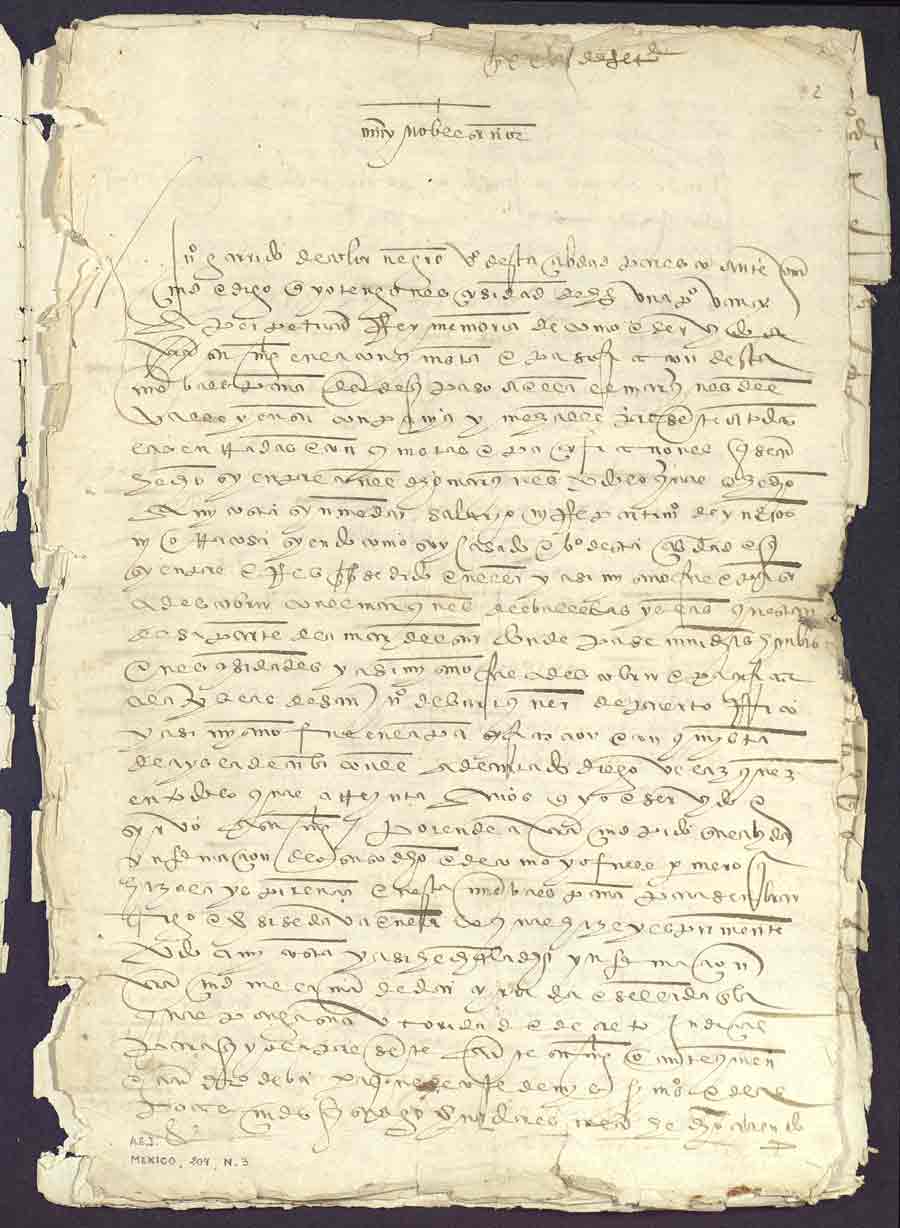
In 1519, Juan Garrido joined Hernan Cortes’ expedition to Mexico. In 1520, he built a chapel in memory of the many Spaniards who died on that expedition. He later married and settled near Mexico City. Garrido is often credited as being the first person to grow wheat in the Americas. From Spanish records, we have Garrido’s written petition for pension from the Spanish crown:
“I, Juan Garrido, black in color, resident of this city (Mexico), appear before Your Mercy and state that I am in need of providing evidence to the perpetuity of the king, a report on how I served Your Majesty in the conquest and pacification of this New Spain, from the time when the Marques del Valle (Cortes) entered it; and in his company I was present at all the invasions and conquests and pacifications which were carried out, always with the said Marques, all of which I did at my own expense without being given either salary or allotment of native or anything else. As I am married and a resident of this city, where I have always lived; and aslo as I went the Marques del Valle to discover the islands which are in that part of the southern sea (the Pacific) where there was much hunger and privation; and also as I went to discover and pacify the islands of San Juan de Buriquen de Puerto Rico; and also as I went on the pacification and conquest of the island of Cuba with the adelantado Diego Velazquez; in all these ways for thirty years have I served and continue to serve Your Majesty – for these reasons stated above do I petition Your Mercy. And also because I was the first to have the inspiration to sow wheat here in New Spain and to see if it took; I did this and experimented at my own expense.”
Estevanico
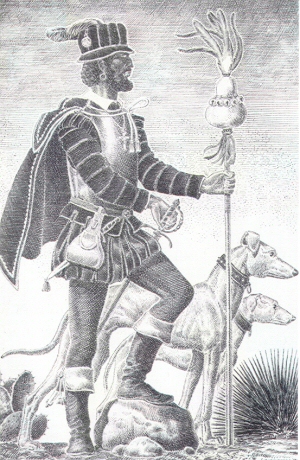
In 1528, the “first great African man in America”, Estevanico, landed near present-day St. Petersburg with the Narvaez Expedition. Born in Morocco, Estevanico was sold into slavery when he was 22 and became a servant to Spanish nobleman, Andres Dorante do Carranza. Dorante join Narvaez in Cuba for an expedition to colonize the New World and took Estevanico with him.
The expedition originally intended to make landfall near Mexico but was battered by storms and changed course to La Florida. Upon landing in what is now Tampa Bay, Narvaez sent his ships north in search of a great bay. Unfortunately, there is no great bay north of Tampa; Narvaez never saw his ships again. Meanwhile, he led 300 men, including Estevanico, and 42 horses along the coast. Within just a few years Estevanico was one of only four men who survived enslavement on the Texas barrier islands. The four men escaped from the coast and called themselves medicine men. This new title garnered them much respect among the Native American tribes, and the men found themselves celebrated from village to village.
Courtesy David Weber Collection, Public domain
Hernando de Soto brought more free and enslaved black men with him in 1539 on his expedition. He, too, made landfall near present-day Tampa and took a number of men through the interior regions of central and north Florida into Georgia and northward through the Appalachian mountains before returning south to the Gulf coast in Louisiana.
Early Settlements in Florida
Pensacola, 1559
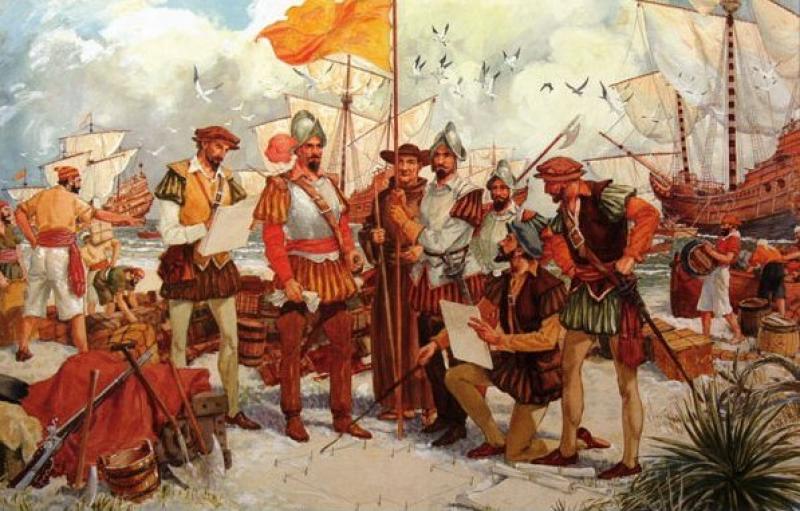
The first European settlement that lasted longer than a few months was Pensacola. It’s widely considered the second oldest town in Florida. In 1559, Tristan de Luna landed in Pensacola Bay with eleven ships and 1500 soldiers, servants, and settlers, “including 550 Spanish soldiers, about 200 Aztecs, and an unknown number of African slaves.”
Fort Caroline and St. Augustine, 1560s
The French Huguenots settled near present-day Jacksonville at a place they called Fort Caroline. Almost simultaneously, the Spanish settled at San Agustin (St. Augustine), led by Pedro Menendez. Though Menendez had a number of black men in his expedition, he noted that there were African settlers at Fort Caroline as well.
We don’t know a whole lot more about Africans or black people in Florida through the 1600s. We do know the first recorded Christian marriage in Florida happened at St. Augustine and was between Miguel Rodriguez, a Spanish soldier from Segovia in Spain, and Luisa de Abrego, a freed black servant. We also know the first recorded birth of a black child occurred in 1606, also in St. Augustine, a boy named Agustin whose parents were noted as Agustin and Francisca, black slaves. However, the first recorded birth of a slave was Esteban in 1595 who was born to a slave named Gratia. We also know that by 1683, Spain had an all-black militia in St. Augustine.
Slavery in Florida: Spanish Laws
Spanish laws of the time set a precedence that dictated how masters and others treated free and enslaved people in Spanish Florida. Spain had a number of laws that determined how slaves were treated and how they could be freed. These laws were observed in Florida while the territory was under Spanish control.
Spanish law granted rights and protections to slaves. These included personal security, the right to legally escape from a cruel master, the right to own and transfer property, and the right to initiate lawsuits. These last two rights evolved into the ability to self-purchase, guaranteeing their freedom.
As early as 1623, Spanish policy towards slaves ensured a much fairer treatment than they received in the British colonies. Any slave who touched Spanish soil and asked for refuge could become a free Spanish citizen. All they had to do was convert to Catholicism and pledge allegiance to Spain. In addition, tradesmen received workshops in which to practice their trades, and farmers received given land grants. These policies not only benefited black people; it benefited Spain by weakening the British colonies.
Gullah Culture in Florida
Though the Spanish offered freedom to escaped slaves, not everyone wanted to join Spain’s militia as a means to gain their freedom. A great number of the escaped slaves were part of the Gullah people of South Carolina and Georgia. They had their own Afro-English creole and African-based leadership and cultural practices. They developed settlements around rice and corn agriculture and became allies of the Creek. Later, their language became an Afro-Seminole Creole spoken with the growing Seminole tribes in Florida.
Final Thought on Slavery in Florida in the 1600s
That Spain’s treatment of slaves appears less severe than they found further north doesn’t negate the fact that Spain found slaves to be integral to the building of their colonies. In fact, according to The African American History of Florida, “The Crown considered slave labor indispensable in Florida, noting that the work of cutting and sawing wood for fortifications and ships was unceasing, and the entire government subsidy would not have been sufficient had wages to be paid.”
Africans, blacks, and mulatos helped shaped much of the Spanish conquest of the Caribbean islands and Americas. Their history in Florida wasn’t always one of being enslaved, nor was their enslavement necessarily any easier or better than in any of the other European colonies. While Spanish policy would shape the future of Florida’s slaves and black communities, it also brought to the state many of the men and women who contributed to Florida in the coming century. As we’ll see when we look at slavery in Florida in the 1700s.

Such a comprehensive account of settlement. Thanks for putting this together. I love history and really enjoyed learning about it in St Augustine but you covered so much stuff I had never thought of before.
Thank you for the history lesson. There’s a lot, I’m sure, that people don’t know about our Florida history. I am sharing it on my FB Mackintosh Travels wall.
Thanks, Cynthia. There definitely is a lot. I’m always pleasantly surprised by what I find when researching these pieces.
Thanks for this well-researched article. It’s a good reminder that not all of our history is sunshine, mermaids, and beaches.
A very informative article! I especially love reading about the hitsory of St. Augustine, because that is where I live.
St. Augustine has a wonderfully diverse history. It’s a lot of fun to dive in to.